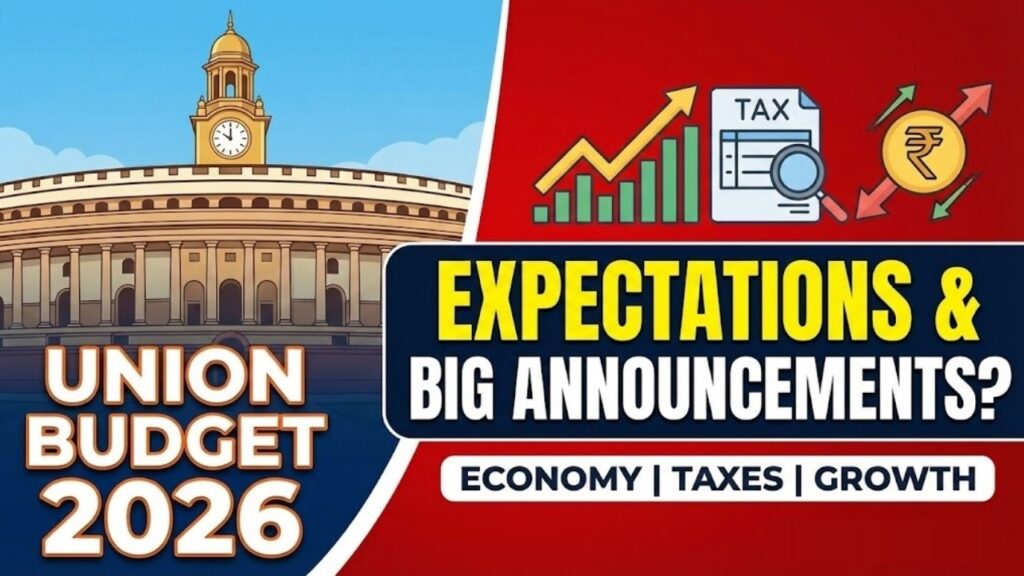
Union Budget 2026 Expectations: As India heads into Union Budget 2026, cigarettes, gutka, and pan masala are firmly back in the policy spotlight. Unlike previous years, the discussion this time is not limited to expectations alone. The government has already initiated a major restructuring of tobacco taxation following the withdrawal of the GST compensation cess. This shift signals that higher prices for tobacco and related products are not just possible but increasingly likely in the coming financial year.
Below is a completely rewritten, fact-based, and engaging article that incorporates all important developments, written in a natural human style with proper H2 headings and without external links.
Structural Shift in Tobacco Taxation Before Budget 2026
One of the most significant developments shaping Union Budget 2026 is the replacement of the GST compensation cess with a new excise-based taxation framework. The compensation cess, which was introduced to offset revenue losses after the rollout of GST, has now served its purpose and is being phased out.
To ensure that the overall tax burden on tobacco products does not decline, the government has introduced additional excise duties on cigarettes and tobacco products, along with a separate health and national security cess on pan masala. This change represents a clear policy shift, giving the central government more direct control over taxation of these products.
How the New Excise Duty Regime Works
Under the revised system, cigarettes are now taxed through a combination of GST and specific excise duties. The excise duty on cigarettes varies depending on factors such as length, filter type, and category. Shorter cigarettes attract lower excise rates, while longer and premium cigarettes face significantly higher duties.

Gutka, chewing tobacco, and scented tobacco products fall under some of the highest excise duty slabs. These products have historically been linked to serious health risks, particularly oral cancer, and the new tax regime reflects the government’s intent to curb their consumption.
Pan masala manufacturers now face an additional health and national security cess, applied at the production stage. This cess is separate from GST and excise duty and is designed to create a dedicated revenue stream for health-related and national priorities.
Retail Sale Price-Based Valuation to Curb Tax Evasion
Another important change that strengthens the new tax structure is the shift towards retail sale price-based valuation for pan masala and certain tobacco products. Instead of relying solely on transaction value, taxes are now linked more closely to the declared retail price.
This move aims to reduce underreporting and tax evasion, which has been a long-standing issue in the pan masala and smokeless tobacco segment. By tying tax liability to retail pricing, the government expects better compliance and more accurate revenue collection.

Public Health Goals Behind Higher Taxes
Public health remains the strongest justification for consistently high taxation on cigarettes, gutka, and pan masala. India continues to face a heavy burden of tobacco-related diseases, including lung cancer, oral cancer, heart disease, and chronic respiratory conditions.
Smokeless tobacco products such as gutka and pan masala are particularly concerning because of their widespread use across socio-economic groups, including youth and daily wage earners. Their affordability and easy availability have contributed to high consumption levels. By raising excise duties and overall prices, the government aims to reduce accessibility and discourage habitual use.
Revenue Needs and Fiscal Planning
Beyond health considerations, fiscal strategy plays a crucial role in shaping tobacco taxation. The government has ambitious expenditure plans covering infrastructure development, healthcare expansion, defense modernization, and social welfare schemes.
Cigarettes and smokeless tobacco products offer relatively stable revenue because demand among regular users tends to be less sensitive to price increases. The new excise duty framework ensures that government revenues from this sector remain strong even after the compensation cess is withdrawn. Union Budget 2026 is expected to reinforce this approach rather than dilute it.

Impact on Prices and Consumer Behavior
With higher excise duties already notified and expected to be maintained or adjusted upward, consumers are likely to experience noticeable price increases. Cigarette prices are expected to rise across categories, with premium and longer cigarettes seeing sharper hikes.
Gutka and pan masala users may face even greater price pressure due to the combined effect of excise duty, GST, and the new health cess. For daily consumers, this could significantly increase monthly spending. While some users may reduce consumption or quit altogether, others may switch to smaller pack sizes or lower-priced alternatives.
Risk of Illicit Trade and Market Distortions
A persistent challenge associated with high tobacco taxation is the growth of illicit trade. Smuggled cigarettes and illegally manufactured gutka and pan masala often enter the market at lower prices, bypassing taxes and regulatory oversight.
If legal products become significantly more expensive, price-sensitive consumers may gravitate toward unregulated alternatives. This not only undermines public health objectives but also results in revenue losses for the government. Effective enforcement, tracking mechanisms, and inter-agency coordination will be critical to ensure that higher taxes achieve their intended outcomes.

Industry Reaction and Compliance Burden
The tobacco and pan masala industry is undergoing a period of adjustment. Manufacturers are facing higher compliance requirements, including stricter registration norms, production monitoring, and reporting obligations under the new cess framework.
While large players may be better equipped to absorb these changes, smaller manufacturers could face operational challenges. Industry groups have raised concerns about the cumulative impact of higher taxes and compliance costs on livelihoods, particularly in tobacco-growing regions.
What Union Budget 2026 Is Likely to Signal
Union Budget 2026 is expected to consolidate the government’s stance on tobacco taxation rather than introduce a reversal. The emphasis is likely to remain on maintaining a high tax incidence, improving compliance, and aligning fiscal policy with public health goals.
Rather than dramatic new announcements, the budget may focus on fine-tuning existing measures, strengthening enforcement against illicit trade, and ensuring steady revenue flow from the sector.
Conclusion
The expectations surrounding Union Budget 2026 make one thing clear: cigarettes, gutka, and pan masala will continue to face strict taxation in India. With the compensation cess phased out and a new excise-led framework in place, higher prices are no longer a distant possibility but an emerging reality.
As the budget approaches, consumers should prepare for increased costs, while the industry braces for tighter regulation and compliance. Ultimately, the government’s approach reflects a broader effort to balance public health priorities with fiscal stability, making tobacco taxation a key pillar of India’s economic and social policy going forward.