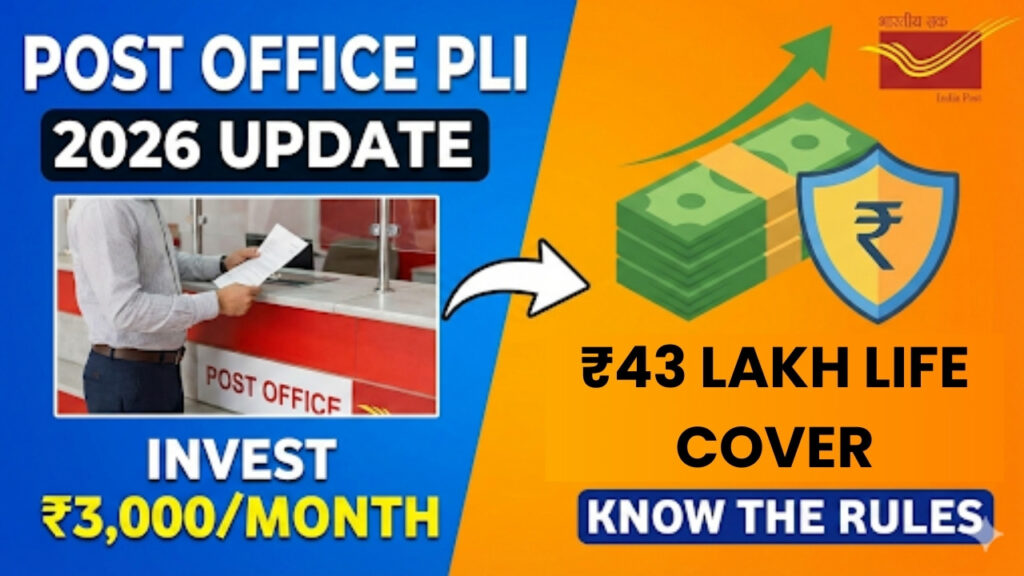
Post Office PLI 2026: Post Office has updated its Postal Life Insurance (PLI) plans for 2026, and one option is grabbing attention: a ₹3,000 monthly premium can secure life cover up to ₹43 lakh.
It’s aman attractive option for anyone looking for long-term protection with manageable monthly payments. Here’s everything you need to know about this plan before subscribing.
Understanding the PLI 2026 Scheme
Postal Life Insurance is a government-backed policy providing life coverage and savings benefits. The 2026 updates include:
- High coverage options at reasonable premiums
- Flexible payment frequencies (monthly, quarterly, or yearly)
- Tax benefits on premiums paid under current rules
For those who want both security and financial planning, this plan is worth a look.
When You Can Enroll
The 2026 PLI policies are available from January 2026 onwards at all post offices nationwide.

Applicants can:
- Visit a local post office
- Complete KYC documents
- Choose a premium and term based on coverage needs
Early enrollment ensures your coverage starts promptly and allows you to lock in current premiums.
How ₹3,000/Month Translates to ₹43 Lakh Coverage
Here’s how the math works in simple terms:
| Monthly Premium | Term (Years) | Life Cover | Key Features |
|---|---|---|---|
| ₹3,000 | 35 | ₹43,00,000 | Tax benefits, maturity value, bonus accumulation |
The actual payout may vary based on age, policy term, and optional riders. But even at standard rates, this plan offers high protection for moderate payments.

Why Consider PLI Over Other Life Insurance Options
- Government-backed security: Your money is safe
- Stable premiums: No surprise hikes during the term
- Additional benefits: Bonuses, maturity value, and tax exemptions
For many users, PLI offers a simple, trustworthy alternative to private insurers.
Understanding Terms and Conditions
Even though the plan is straightforward, there are some rules to keep in mind:
- Premiums must be paid regularly to maintain coverage
- Nominee details should be accurate for smooth claim processing
- Optional riders may increase premium but also increase benefits
Following these guidelines ensures your life cover remains valid.
PLI vs Traditional Private Insurance
| Feature | PLI 2026 | Typical Private Policy |
|---|---|---|
| Backing | Government | Private company |
| Premium Stability | Fixed | Can increase with age |
| Life Cover | High relative to payment | Varies, sometimes lower |
| Tax Benefits | Yes | Depends on policy |
This table highlights why PLI is especially popular among middle-income households seeking high protection at manageable costs.

Common Mistakes to Avoid
- Missing premium payments, which can lapse the policy
- Forgetting to update nominee or KYC details
- Assuming coverage includes accidental riders automatically
Always double-check your policy documents and post office guidelines.
Practical Tips to Maximize Benefits
- Choose the term carefully to match your family and financial goals
- Keep track of bonuses and maturity accumulation
- Review your coverage periodically as your financial situation changes
This ensures you get the most out of your investment.
Conclusion
If your goal is high life coverage with manageable monthly payments, the Post Office PLI 2026 scheme is a solid option.
With government backing, tax advantages, and straightforward rules, it’s designed for long-term security without the complexity of many private insurance plans.

FAQs
When can I start this policy?
PLI 2026 plans are available from January 2026 at all post offices.
What is the life cover for ₹3,000/month?
You can get up to ₹43 lakh coverage, depending on age and term.
Are the premiums fixed?
Yes, premiums for the chosen term remain stable throughout the policy.
Can I choose the payment frequency?
Yes, you can pay monthly, quarterly, half-yearly, or yearly depending on convenience.
What happens if I miss a payment?
Missing premiums can lapse the policy, so timely payments are crucial.