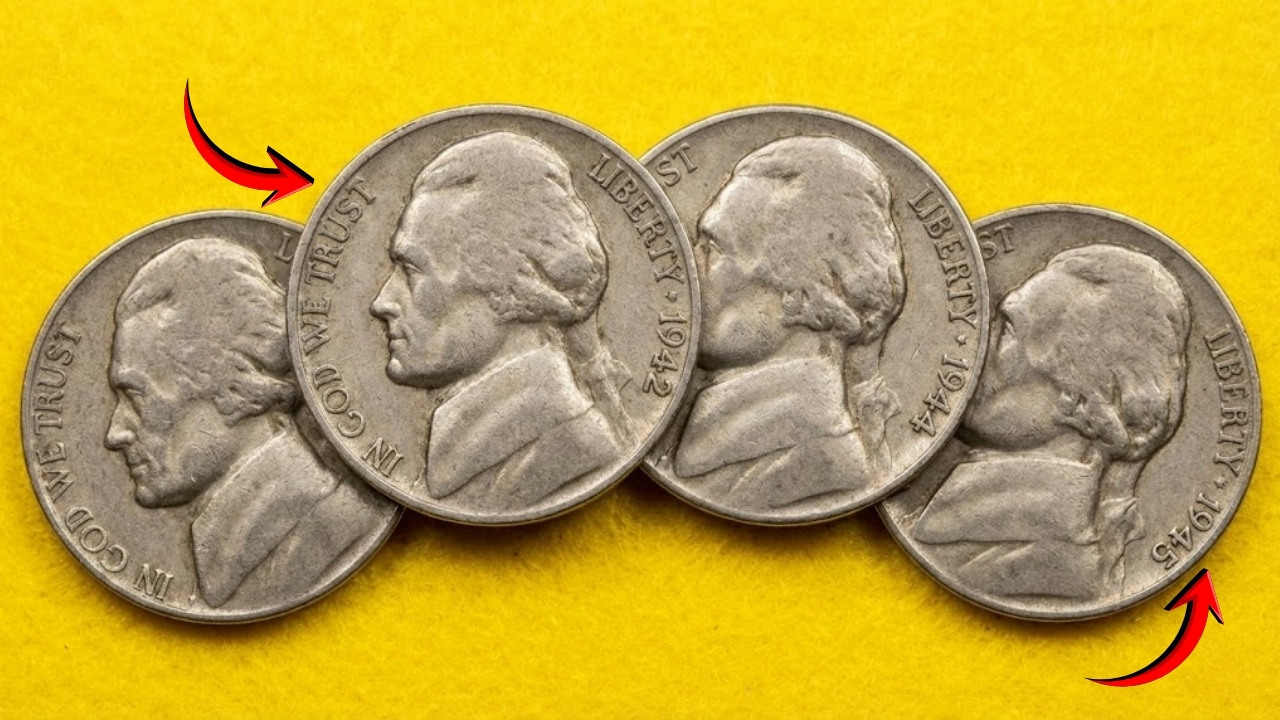
1942–1945 Jefferson Nickel: Imagine checking your loose change and realizing one small coin could be worth far more than five cents. That is exactly what has many collectors and everyday people excited about the 1942–1945 Jefferson Nickel. Often called the “silver nickel” or “wartime nickel,” this coin has recently gained renewed attention as silver prices rise and interest in historical U.S. coins grows. These nickels are not just currency; they are miniature pieces of American history tied directly to World War II.
The Historical Reason Behind Silver Nickels
During World War II, the United States faced a shortage of critical metals. Nickel was urgently needed for military equipment, armor, and weapons. To conserve this metal, the U.S. Mint changed the composition of the Jefferson Nickel between late 1942 and 1945. Instead of the usual copper-nickel blend, these wartime nickels were struck using an alloy that included silver, making them unique in U.S. coinage history.
| Feature | Regular Jefferson Nickel | Wartime Jefferson Nickel |
|---|---|---|
| Years Produced | 1938–Present | 1942–1945 |
| Silver Content | None | 35 percent |
| Mint Mark Location | Right of Monticello | Above Monticello |
| Reason for Design | Standard circulation | Metal conservation during WWII |
| Collector Interest | Common | High and growing |
How to Identify a 1942–1945 Silver Jefferson Nickel
One of the reasons these coins are so exciting is how easy they are to identify. The U.S. Mint made a clear design change so people could distinguish them from regular nickels. The most noticeable feature is the large mint mark above Monticello on the reverse side of the coin.
Look closely and you will see a prominent P, D, or S positioned above the dome of Monticello. This was the first time a “P” mint mark was ever used on a U.S. coin, which adds to its historical importance. It is important to remember that not all 1942 nickels are silver. Only those with the large mint mark above Monticello contain silver.

Why Silver Nickels Are Worth More Today
The increased value of these nickels comes from a combination of rising silver prices, collector demand, and historical significance. Each wartime nickel contains real silver, which gives it a built-in value that increases when silver prices go up.
Beyond metal value, collectors are drawn to coins connected to major world events. World War II memorabilia continues to gain popularity, and coins from this era are especially appealing because they were used daily by ordinary Americans during extraordinary times.
Collector Value vs. Melt Value
While silver content sets a minimum value, collector interest can push prices much higher. The condition of the coin plays a major role. Nickels with sharp details, minimal wear, and strong luster are far more desirable than heavily worn examples.

Certain mint locations and dates are also more valuable. Coins from the San Francisco Mint or examples with well-defined features often sell for a premium. Uncirculated wartime nickels can be worth many times more than their melt value.
Errors and Rare Variations That Increase Value
Some 1942–1945 Jefferson Nickels are worth significantly more due to minting errors. These include double dies, off-center strikes, or planchet errors. Such coins are rare and highly sought after by serious collectors.
Another valuable variation is the full-step nickel. On the reverse side, Monticello has a series of steps. Coins where these steps are clearly visible and uninterrupted are considered top quality and can command strong prices in the collector market.

Why Interest Is Growing Among New Collectors
Coin collecting has experienced renewed interest in recent years. Online marketplaces and social media have made it easier than ever to learn about valuable coins and share discoveries. Stories of silver nickels found in pocket change or old collections continue to inspire new collectors.
Wartime nickels are especially attractive because they are affordable, historically significant, and easy to identify. This combination makes them a popular starting point for people entering the hobby.
Should You Sell or Hold a Wartime Nickel?
Whether to sell or hold depends on your personal goals. If you are focused on silver prices, selling during a strong market may be appealing. However, collectors often prefer to hold onto high-quality examples, as historical coins tend to increase in value over time.

For many people, keeping a wartime nickel is about more than money. It is a physical connection to history and a reminder of how the nation adapted during a time of global conflict.
How to Store and Protect Your Silver Nickels
Proper storage is important for maintaining value. Silver can tarnish if exposed to air and moisture. Using coin holders or protective flips and storing them in a cool, dry place can help preserve their condition.
Avoid cleaning the coin under any circumstances. Cleaning can damage the surface and significantly reduce its value, even if the coin looks shinier afterward.

Final Thoughts
The 1942–1945 Jefferson Silver Nickel is far more than spare change. It reflects a unique moment in American history when even everyday objects were shaped by wartime needs. With rising interest in silver and historical collectibles, these nickels are once again in the spotlight.
If you find one, you are holding a coin that combines metal value, historical importance, and collector appeal. Whether you choose to sell it, save it, or start a collection, the wartime nickel proves that small discoveries can carry powerful stories.