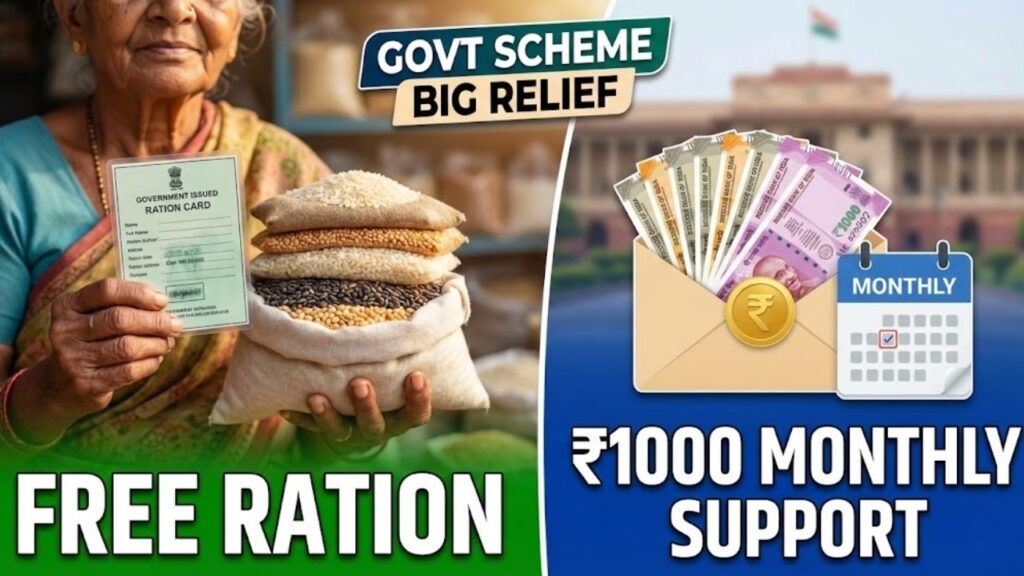
Ration Card Holders Get Big Relief: In recent months, the government has launched a scheme designed to provide much-needed relief to ration card holders across the country. The promise is compelling: free ration supplies and ₹1000 in monthly support. On paper, it’s a lifeline for millions struggling with rising costs and economic pressures. However, for many, the process isn’t as straightforward as it seems. From paperwork snags to bureaucratic delays, the reality of getting this aid can be frustrating and complicated. So, is this scheme really worth your time? Let’s break it down.
The Promise of the Scheme: What’s on Offer?
For ration card holders, the scheme aims to alleviate some of the financial burdens caused by inflation, job losses, and the economic slowdown. It promises two primary benefits:
- Free Ration: Eligible cardholders will receive essential grains and food items like rice, wheat, and pulses, free of charge for a limited period.
- ₹1000 Monthly Support: In addition to free food, those eligible for the scheme are promised a direct cash transfer of ₹1000 every month.
At face value, this could significantly ease the financial strain for families in need, particularly those relying on daily wages or living in poverty.

High-Chance Applicants: Who Actually Gets Help?
For some applicants, the process is relatively smooth, and they meet the eligibility criteria without major issues. These individuals are typically:
- Households with a valid, up-to-date ration card: If you already have a ration card and your details are correctly registered in the government system, you’re off to a good start.
- Those with clear proof of need: The scheme targets low-income families, so applicants who can show they’re below the poverty line, unemployed, or living in economically distressed areas have a higher chance of success.
These applicants may find that they’re eligible quickly and can start receiving benefits without significant delays, especially if their paperwork is already in order.

Low-Chance Applicants: The Reality for Many
While the government might promise assistance for everyone, the reality is that many applicants face roadblocks that can prevent them from receiving their share of the relief. Here are some of the most common issues:
- Mismatched or Incorrect Information: One of the most significant hurdles for applicants is outdated or incorrect details in government records. Many households, particularly in rural or informal sectors, may not have their data updated in the National Food Security Act (NFSA) system. Whether it’s a misspelled name, incorrect address, or missing documents, these discrepancies can lead to disqualification or delays.
- Technical Issues with Online Applications: The process has been digitized in many areas, requiring applicants to submit applications online. However, technical glitches from website crashes to incomplete submissions have left many without benefits. For applicants in remote areas with limited access to technology or the internet, this can be a serious barrier.
- Bureaucratic Delays and Backlogs: Even when applications are submitted correctly, they often get stuck in a bureaucratic bottleneck. Local offices may have limited staff, or the verification process might be slow. It’s common for applicants to wait for months before they hear back about their approval, leaving families in limbo without the relief they were promised.
- Eligibility Ambiguities: While the scheme targets low-income households, the definition of “eligible” can be unclear. Families that are just above the poverty line or living in areas with less severe economic conditions might find themselves excluded, even though they too struggle to make ends meet.
- Corruption and Mismanagement: In some regions, reports of corruption or mismanagement have surfaced, where the benefits intended for low-income families get diverted or are distributed unfairly. These issues can prevent those who truly need help from accessing it, or result in less-than-adequate assistance.
So, Is It Worth Your Time?
Here’s the cold truth: the scheme offers substantial support, but many applicants will face significant hurdles. If your paperwork is up-to-date, your household fits the clear eligibility criteria, and you live in an area where the local government has efficient processes, you may be able to access the relief with relatively few issues.

However, for many others especially those in rural areas or who rely on outdated systems getting approved and actually receiving aid can be a long and frustrating process. Delays, technical difficulties, and bureaucratic inertia are common, and not everyone will be able to take advantage of the scheme.
If you are someone who can check all the boxes correct paperwork, accurate details, and reliable internet access then the scheme may be worth pursuing, especially in these tough economic times. But if you’re dealing with outdated information, bureaucratic barriers, or other systemic issues, it may feel like a losing battle. The process might drain more time and energy than it’s worth, and many families end up without the benefits they need.

Conclusion
While the government’s scheme is well-intentioned, its actual implementation leaves much to be desired. For those with the right circumstances, it could offer critical financial relief. But for the majority, the experience can be marked by delays, frustration, and sometimes, outright rejection. It’s essential to approach the scheme with realistic expectations, understanding that the process may not be as smooth as the government’s announcements suggest.
If you’re on the fence about applying, it’s worth weighing the time and effort required against the potential benefits. Ultimately, for many, this may be a case of “wait and see” whether the government can streamline its systems and address the challenges that many applicants face.