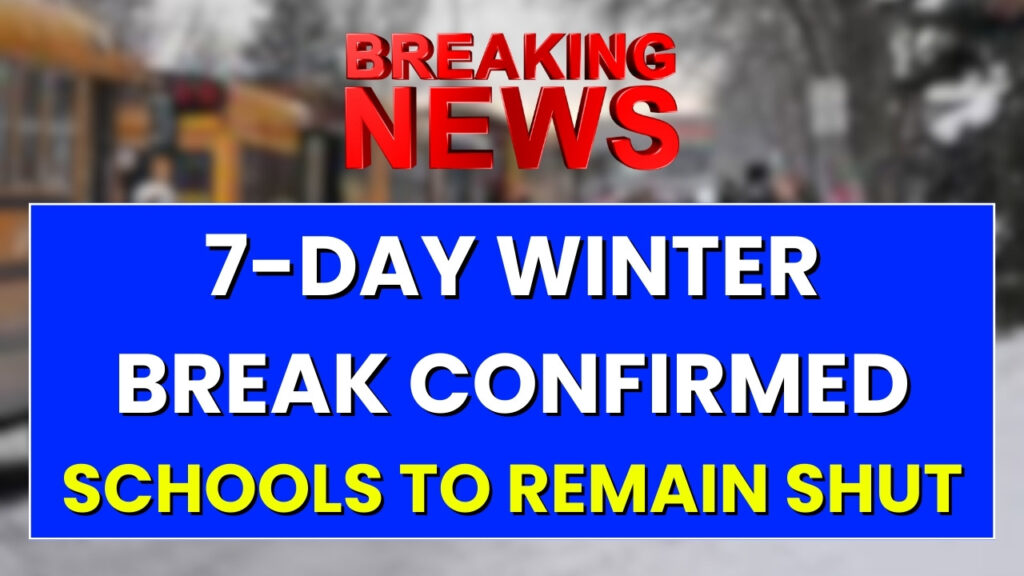
7-Day Winter Break: As winter intensifies across several regions, education authorities have officially announced a 7-day winter break for schools. This decision comes as a relief for students and parents alike, especially amid falling temperatures, dense fog, and health concerns linked to cold weather. The announcement has sparked widespread discussion among families who are now adjusting routines, travel plans, and study schedules. Understanding the purpose of this winter break and how it affects students is essential for parents to make informed decisions during this period.
Reason Behind the 7-Day Winter Break
The primary reason for declaring a winter break is student safety. During peak winter days, temperatures often drop to uncomfortable and sometimes dangerous levels, particularly in northern and hilly regions. Cold waves, poor visibility due to fog, and increased risk of seasonal illnesses make daily commuting to school challenging. Younger children are especially vulnerable to cold-related health issues, which is why authorities prefer to temporarily suspend physical classes rather than risk student well-being. The 7-day duration is designed to cover the harshest part of the winter spell.
Which Schools Are Covered Under the Break
The winter break applies to government and private schools across selected regions where cold conditions are severe. Both primary and secondary schools are included, though some areas may apply the closure more strictly to lower classes. In certain districts, schools offering online or hybrid education may continue with limited digital learning, while others have opted for a complete pause in academic activities. Parents are advised to stay updated through official school notifications for exact details applicable to their child’s institution.

Impact on Academic Schedule
One of the biggest concerns for parents is whether the winter break will affect the academic calendar. Education departments have clarified that the missed days will be adjusted later in the academic year if necessary. This may include slight extensions of school hours, additional classes, or rescheduling of examinations. Teachers are often instructed to revise lesson plans accordingly, ensuring that syllabus completion does not suffer. For students preparing for board or competitive exams, schools may provide revision assignments or optional online sessions.
Health Benefits for Students
A winter break offers more than just time off from school. It allows children to rest, recover, and stay protected from harsh weather conditions. Exposure to cold, especially during early morning school hours, can lead to cough, flu, fever, and other respiratory problems. Staying indoors during extreme cold significantly reduces these risks. Parents can use this time to focus on their child’s nutrition, sleep, and overall well-being, which often gets overlooked during busy school days.

What Parents Should Do During the Break
Parents play a crucial role in ensuring that the winter break is both safe and productive. While relaxation is important, maintaining a balanced routine helps children stay disciplined. Encouraging light reading, revision of previous lessons, or engaging in educational games can prevent learning gaps. At the same time, parents should ensure children stay warm, hydrated, and away from prolonged exposure to cold outdoor conditions. Monitoring screen time is also important, as children may tend to spend more time on devices during holidays.
Managing Screen Time and Indoor Activities
With schools closed, children often turn to mobile phones, television, and gaming for entertainment. While moderate screen time is acceptable, excessive use can affect eyesight, sleep patterns, and attention span. Parents can introduce creative indoor activities such as drawing, storytelling, puzzles, or board games. These activities not only keep children engaged but also strengthen family bonding. Simple physical exercises or indoor yoga can help maintain fitness during days when outdoor play is limited.

Special Instructions From Schools
Many schools issue guidelines during winter breaks to help parents and students stay connected with academics. These may include holiday homework, reading tasks, or revision worksheets. Some schools also advise parents to check official communication channels for updates in case weather conditions require an extension or early reopening. Parents should ensure that children complete assigned tasks without treating the break as a complete academic shutdown.
Possibility of Break Extension
Weather conditions remain unpredictable during peak winter months. In some cases, authorities may extend the break if temperatures continue to remain extremely low or fog conditions worsen. Parents should stay alert and avoid relying on unofficial information. School administrations usually provide timely updates regarding extensions or changes in reopening dates. Being prepared for both scenarios helps families plan better.

Effect on Working Parents
For working parents, a sudden school closure can pose logistical challenges. Managing childcare while maintaining work responsibilities requires planning. Some parents rely on family support, while others adjust work schedules or opt for remote work where possible. Employers are increasingly aware of such seasonal challenges and may offer flexibility during this period. Open communication between parents and workplaces can ease stress during the winter break.
Preparing for School Reopening
As the winter break comes to an end, parents should help children transition smoothly back to school routine. Gradually adjusting sleep schedules, organizing school supplies, and revising key subjects can reduce stress on the first day back. Ensuring children are properly dressed for cold weather and equipped with necessary winter gear is equally important. A smooth return helps children regain focus and confidence.
Final Thoughts for Parents
The confirmed 7-day winter break is a necessary step to protect students during harsh weather conditions. While it temporarily disrupts daily routines, it also provides an opportunity for rest, family time, and health recovery. With thoughtful planning, parents can ensure that their children remain safe, engaged, and academically prepared during this period. Staying informed, maintaining balance, and prioritizing well-being will help families make the most of this winter break.